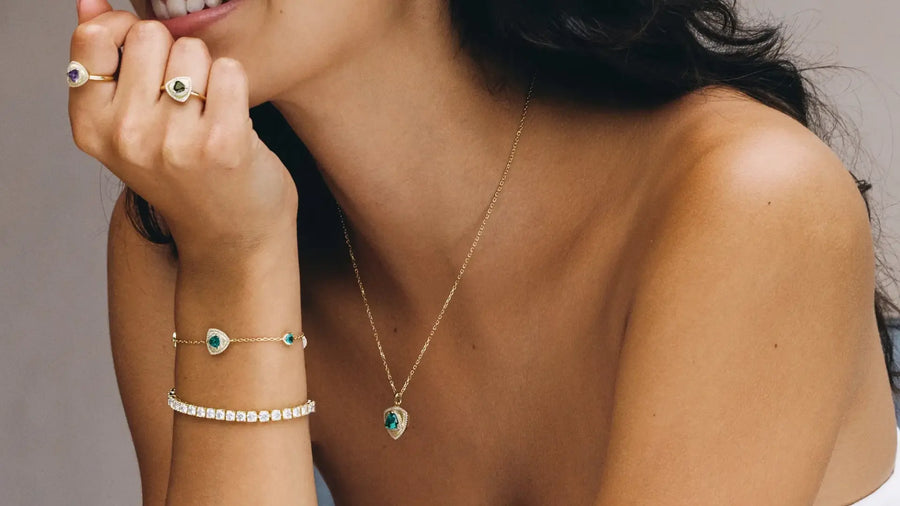
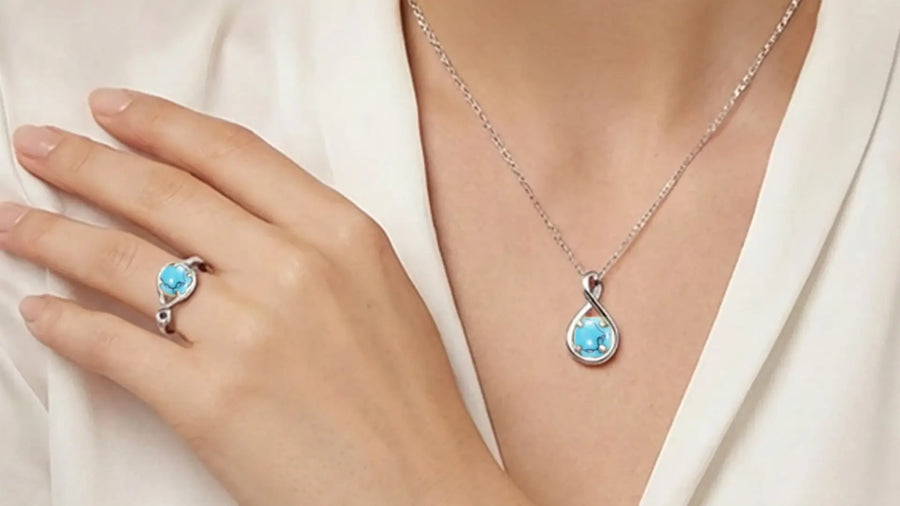
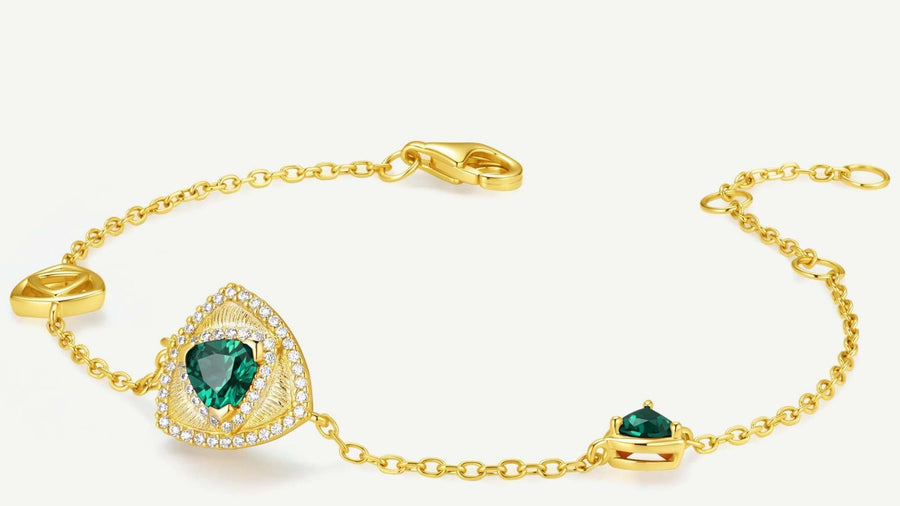
A birthstone tennis bracelet turns one unbroken line of stones into a family calendar. Each position holds a different birth month, so the row reads as a timeline of the people who matter most. The design works because a tennis setting keeps every stone at one size and one height, whichever month it represents.
Key Takeaways
The essentials at a glance:
- A tennis setting places stones of one size in a single flexible line, which suits a run of different birth months.
- Calendar order from January onward is the easiest arrangement to read, though family branches work just as well.
- Matching stone size matters more than matching stone color, because the eye follows the even rhythm of the row.
- The softest stone in the line sets the care routine for the whole bracelet.
- Leave a little slack in the fit so the row moves without twisting against the wrist.
A Tennis Row Turns Months Into a Timeline
A continuous line of stones is the natural shape for a family timeline. A tennis bracelet is built from a run of linked settings that sit close together with no gaps, so the finished piece reads as a single band of color rather than a group of separate charms. That even structure gives every month equal weight. January sits beside July without either one looking like the main event, which is exactly what you want when the bracelet stands for a whole family.
Each position in the row can stand for one person. A grandmother might fill the first slots with the months of her children, then add grandchildren as they arrive. Parents often use one stone per child and stop there. Because the wrist stays in view all day, the sequence remains visible in a way a pendant tucked under a collar does not. You can glance down and read the months in order, and the piece becomes a quiet record rather than something you only notice when you dress up.
The same idea scales up or down. A short row of three stones suits a small family, while a full wrist of twelve turns the bracelet into a generational chart. If you are still deciding how a line like this should sit, the tennis bracelet collection shows the standard lengths, and the birthstone jewelry collection gathers the month stones that fill them. The how to choose a birthstone bracelet page walks through fit and clasp options before you commit to a count.

Keep the Stones One Consistent Size
Uniform stone size is what makes a mixed month row look intentional. A tennis setting repeats one small frame again and again, and the repetition is the whole point. When every stone is cut to the same millimeter width and set at the same height, the bracelet reads as a clean line. Swap in one larger stone and the rhythm breaks, even if the color is lovely.
Birth months come with very different colors, so size is the one feature you can fully control. April may bring a clear diamond, July a red ruby, and October a pale opal, yet a shared round cut and a shared setting ties them together. The GIA gemstone reference explains why cut and proportion affect how a stone sits in a setting, which is useful reading when you are matching unlike materials. The GIA guide to birthstones lists the traditional options for each month if you want to double check the palette before ordering. The GIA April birthstones page shows how a single month maps to a specific stone, which helps when you are building a row out of unlike materials.
Consistency applies to the metal frame too. Prong settings lift a stone and catch more light, while bezel settings wrap the edge and keep a lower profile. Mixing the two inside one row makes the line look uneven, so pick one and stay with it. If a particular month calls for a stone that is hard to source in the right size, a same size alternative keeps the pattern intact. The birthstone bracelets collection shows how different settings handle a repeated row, and the charm versus fixed bracelet durability comparison explains what you give up when the line is permanent.
Plan the Order Before You Buy
Decide the sequence before the stones are set, because a birthstone tennis bracelet with a fixed row is difficult to rearrange later. Most people start with calendar order, running from January through December, since it is the arrangement anyone can read without an explanation. A grandmother with a March, a June, and a November grandchild gets a tidy ascending line that also happens to look balanced.
Family branches are the other common choice. One side of the family can occupy the first half of the row and the other side the second, which makes the piece easier to talk about at a gathering. Neither order is more correct than the other, so choose the one you can describe in a single sentence. The multi generation birthstone family guide covers how larger families distribute months across more than one piece when a single wrist runs out of room, and the birthstone color and symbol guide helps you group stones by hue if color harmony matters more than chronology.
Leave room for the future. A row that exactly fills the wrist has no space for a new baby or a new partner, so a slightly shorter run with an extender is often the wiser buy. Charm style versions let the line grow one link at a time, while a fixed setting locks the count at purchase. If you expect change, ask whether the clasp can take an added link before you order. There is also the question of how the bracelet feels in daily use, and the tennis bracelet everyday styling tips page covers what a continuous row is like to wear with sleeves and layered pieces.

Match the Metal and Care to Daily Wear
Base the care routine for the whole bracelet on its most delicate stone. A line that mixes months also mixes hardness, and the gentlest material in the row sets the rules for cleaning, storage, and water. Diamond handles daily wear with ease, while pearl and opal scratch and dull more readily. The GIA guide to diamonds explains where the hardest option sits on the scale, and the GIA guide to pearls covers why the softer choices need a milder routine. When one soft stone shares a row with harder neighbors, wipe the full bracelet with a dry cloth rather than soaking it.
Colorful months add their own considerations. Sapphire and ruby are durable enough for a bracelet that rarely comes off, and the GIA guide to sapphires describes why that family suits frequent wear. The general goal is simple: pick a care routine that keeps the weakest stone safe, and the rest of the line will follow along.
Metal choice matters as much as stone choice for a piece worn every day. Bracelets meet desk edges, door handles, and sleeve cuffs, so a finish that resists scuffs is worth asking about. Gold tone styles can be plated, so check the product page for the exact material before you buy rather than assuming the whole piece is one metal. The cleaning birthstone jewelry at home guide gives a gentle routine for mixed rows, and the care for sterling silver jewelry page explains how to slow down surface changes on silver settings. Store the bracelet flat in a soft pouch, and the row keeps its even shape for years.
Frequently Asked Questions About Birthstone Tennis Bracelets
Q1: What makes a bracelet a tennis bracelet?
A tennis bracelet is a flexible line of individually set stones with no gaps between them. The stones share one size and one height, so the piece reads as a continuous band. That even structure is what lets different birth months sit side by side without one dominating the design.
Q2: Can I put twelve birth months on one bracelet?
Yes, a full wrist usually holds twelve small stones. The trade off is size, since each stone has to be narrow enough to fit. A shorter row of three to five stones leaves more room for larger settings and is easier to read at a glance.
Q3: Should the months go in calendar order?
Calendar order is the simplest choice because anyone can follow it, but it is not a rule. Grouping by family branch or by color often tells a clearer story. Pick the sequence you can explain in one sentence, since a fixed row is hard to reorder later.
Q4: Which birthstone holds up best in a tennis row?
Diamond is the hardest option and takes daily knocks well, followed by sapphire and ruby. Pearl and opal need gentler handling, so a row that includes them should be wiped rather than soaked. Care for the entire bracelet based on its softest stone.
Q5: Can I add a stone after I buy the bracelet?
Only if the design allows it. A fixed tennis row is set as one finished piece, while a charm or link style can grow. If you expect new family members, choose a style with an extender or a clasp that accepts extra links from the start.